*Update: The amazing Status community has translated the Quarterly report in to the following languages - Español, 中文, Français, Русский, Italiano, 日本語訳, Deutsch, 한국어.
If you would like to translate the report, or future reports into another language, please contact us at [email protected].
Welcome to the first edition of the Status quarterly report - a tour through the Status network looking at all of our recent news – across development, community, and our ecosystem (we're proud to be, in fact, the most active ERC20 project by developer activity). We'll be taking a pulse on our current swarms, and wrapping up the progress we made in the quarter.
We're creating a secure communication tool that brings together chat, wallet, and web3 browsing all in one place. We're doing this with a distributed team of 60 core contributors, 15 ambassadors, and an amazing community of open source contributors.
However; we're dreaming bigger and beyond! Our vision is to create decentralized infrastructure that upholds human rights and preserves cultures by allowing people to communicate and transact securely and privately.
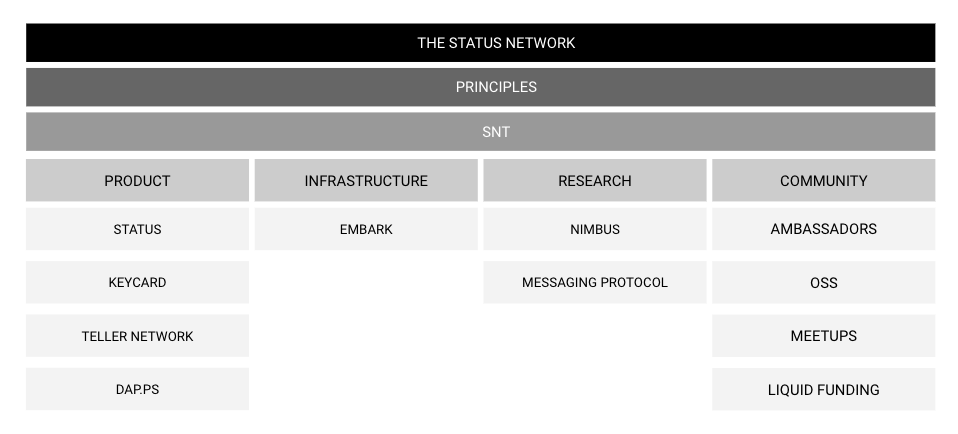
The Status Network is a vast ecosystem, underpinned by Principles that inform everything we do. So without further ado, let's jump in!
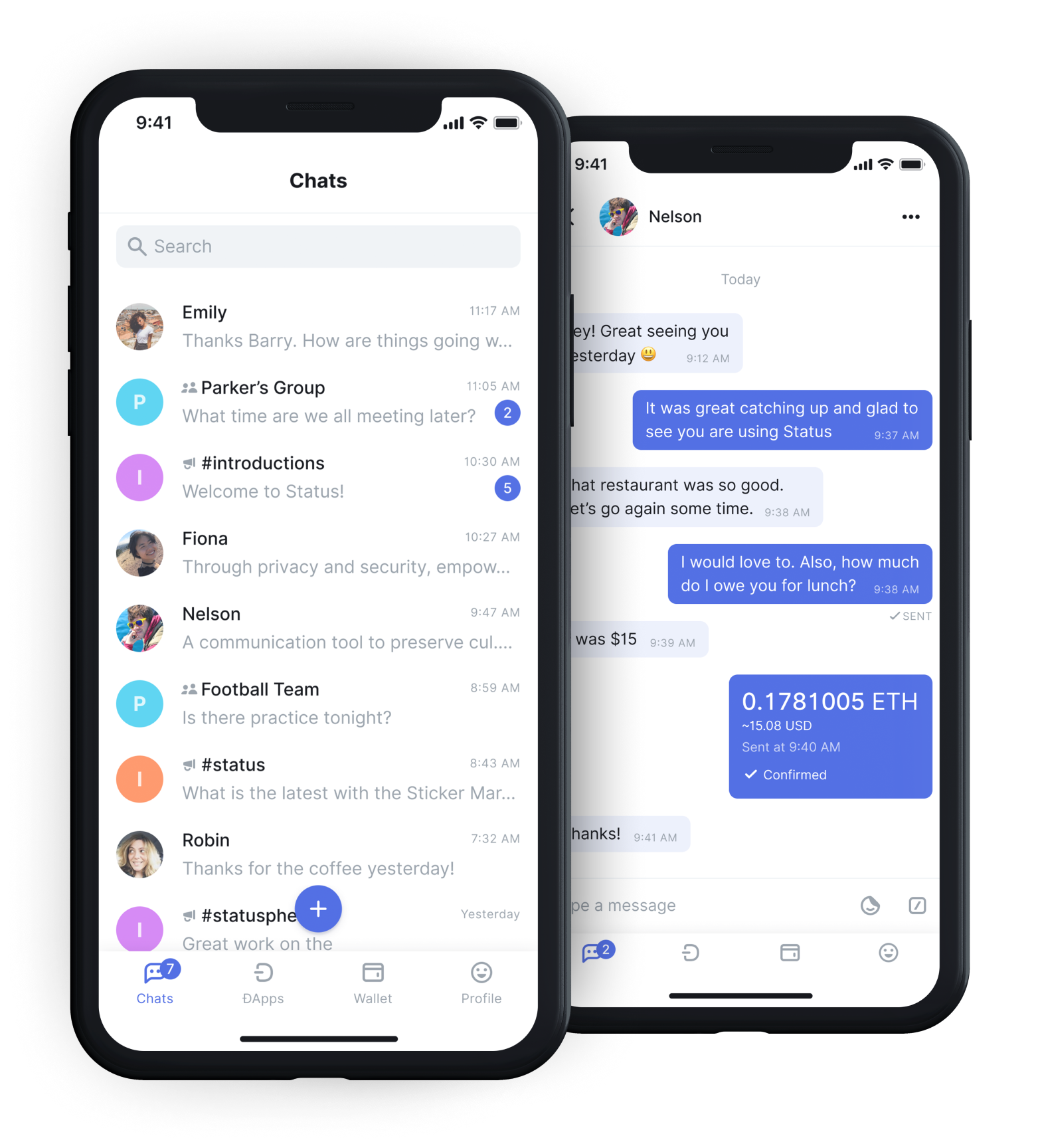
Our privacy principle restricts us from tracking users accurately, but we have two proxies:
- 1We log unique Whisper peer IDs every three hours of usage over the previous 30 days. The highest active number of users logged in one timeframe was 820. We then estimate an average number over the past 30 days, which comes out a little less, with a low of 292 and a high of 820.
- 2We have a little under 10k installs as determined via beta Playstore and Test Flight data.
The Status mobile app is in beta, and this quarter we pushed onwards in the direction of the v1 launch.
Q2 focused on app specification, and implementation of the major features of v1. These include:
- Support for multiple accounts (i.e. Status app will be able to hold several identities like it does today, but each identity has the ability to hold several accounts, to give further flexibility for the user to manage their keys),
- Integration of Keycard into Status,
- Improved onboarding flow, including better ENS username registration,
- Improved performance on mobile,
- Reproducible builds on Android,
- SNT utilities (check out the next section of this report for more info on these).
Moving into Q3, we're asking ourselves the big question on whether to support backwards compatibility from v1 to beta, and nailing down v1 scope in anticipation of the launch.
We're hoping to have a release in app stores by the end of September 2019. The product will undergo a security audit by a third party auditing firm, Trail of Bits. Stay tuned for more details of the final scope and security audit.
We've been improving mobile UI in the desktop app for experience and development parity between the two apps. Our goal is to eliminate two different codebases, and have a single UI that works on both mobile and desktop. This development is nearing completion, and you'll soon be able to run a two-pane UI. Keep watching this space!
Status Network Token powers decentralized services within the Status Network and the app. We've shipped our V0 of an SNT analytics dashboard, which currently features stats for ENS usernames as the first live SNT use case. Q2 saw us carry out research on cryptoeconomic models to assess the long term prospects of the Status Network, starting with projecting the potential value of ENS usernames and the Sticker Market.
There are currently 68,765 SNT holders, with 709,331 transfers having been made, and a total supply of ~6,805m SNT. You can see more token metrics here.
Some of the use cases of SNT, and our latest work on them, are recapped below.
IN DEVELOPMENT
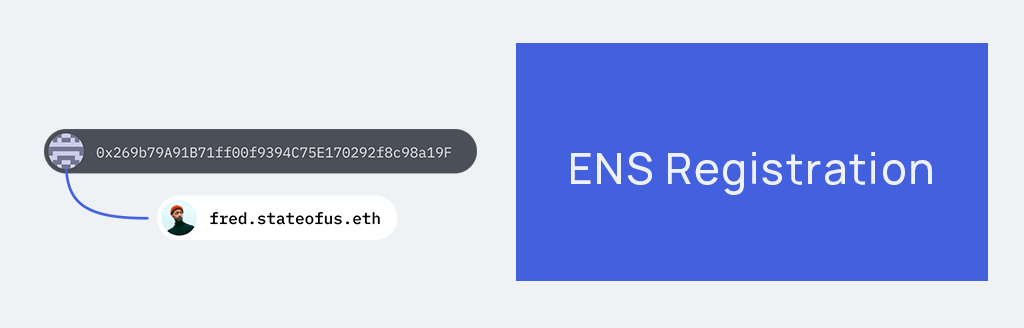
ENS usernames are akin to a decentralized DNS, giving users human readable names in place of the hexadecimal hash.
In Q2, we moved registration of ENS usernames inside Status, natively, where it had previously been developed as a DApp. Why?:
- For a quicker user experience (less loading time);
- To make it easier to reference names inside the client;
- For easier maintenance.
Work was done on ENS chat resolution, bringing us close to the point where a user's ENS name can be their default display name inside the app. We haven't launched it yet, as there are some changes required to verify pre-owned names under multi-account. It's scheduled for launch in the v1 release.
We made some updates to the profile and overall identity structure to encourage username registration. Users will no longer be able to register a custom display, but can instead use either their random name or an ENS name. We also have a feature in the pipeline to set custom nicknames for other users inside the app, that only you can see (similar to a regular address book contact).
IN DEVELOPMENT
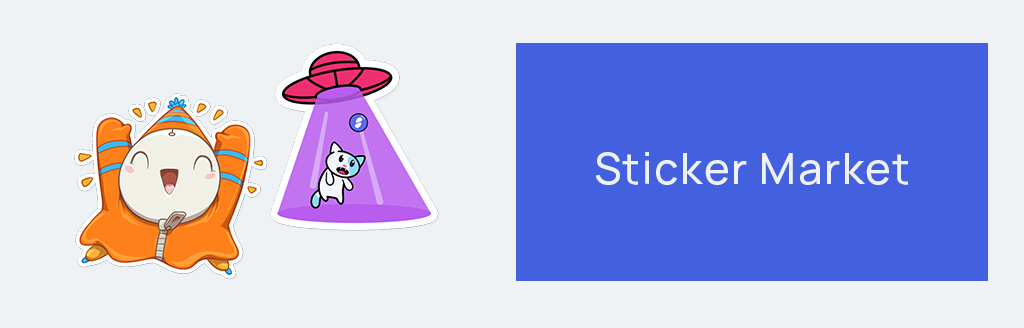
The aim is that anyone can create and sell their own sticker pack designs within Status, with SNT as the currency to buy said stickers; within a curated marketplace. Work on Sticker Market this quarter included finalizing the UI, enabling Sticker Market on testnets, and a contract audit. Sticker Market will be shipped in the coming v0.14 release.
One of the first sticker packs available will be from our #stickerheads competition winner, @cryptoworld1373.
I love cats 🐱 and status #StickerHeads #snt pic.twitter.com/03YVJMy9LC
— cryptoworld (@cryptoworld1373) February 26, 2019
LIVE
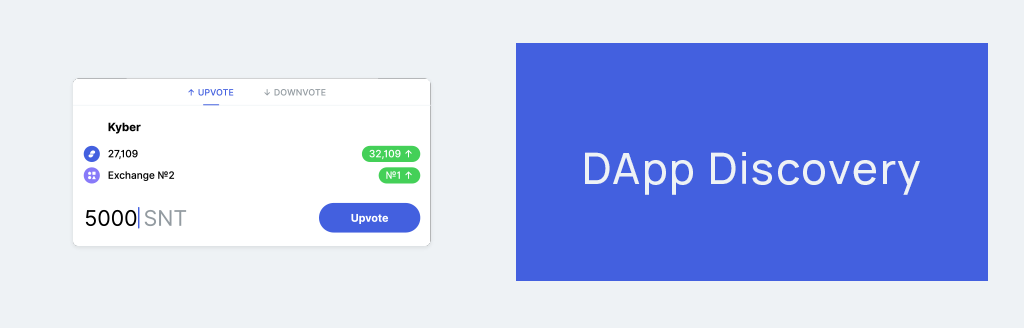
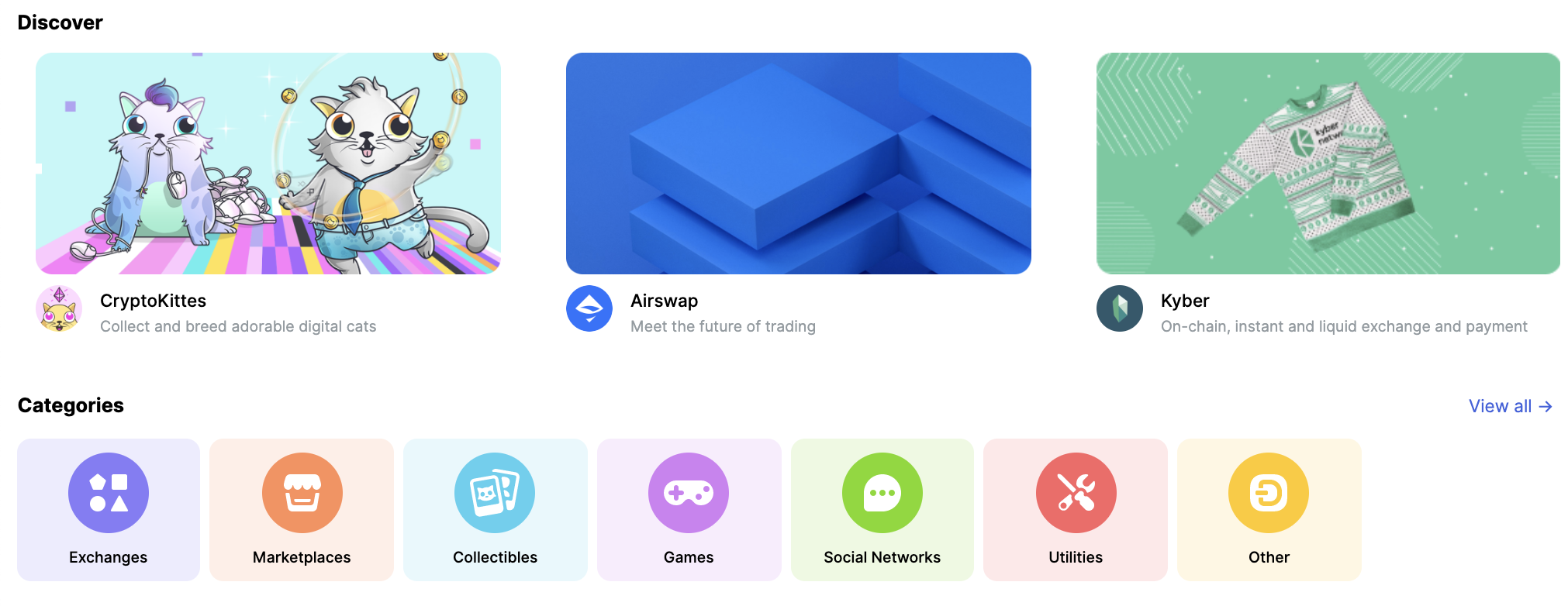
Q2 went off with a bang in shipping https://dap.ps/; a directory of DApps curated and categorized by community members. We're not quite done yet - v2 of DApp Discovery is coming soon.
If you're a developer with a cool DApp to submit, you can do that here.
IN DEVELOPMENT
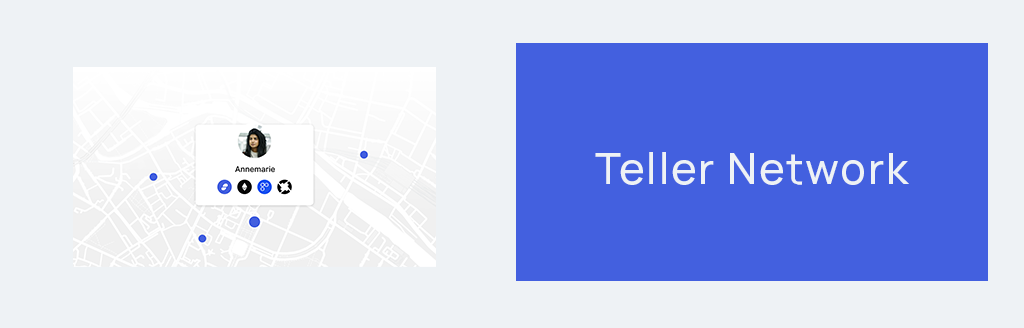
We want to empower instant peer to peer fiat-crypto exchanging. Our Teller Network DApp will allow people to find nearby users looking to exchange digital assets for cash.
Q2 saw development of key functionality such as seller management, dispute resolution, user ratings, arbitrators' licenses, and escrow. Teller Network has been deployed to testnet, and is currently undergoing rigorous testing on both Rinkeby and Ropsten. Mainnet will be coming soon!
ON HOLD
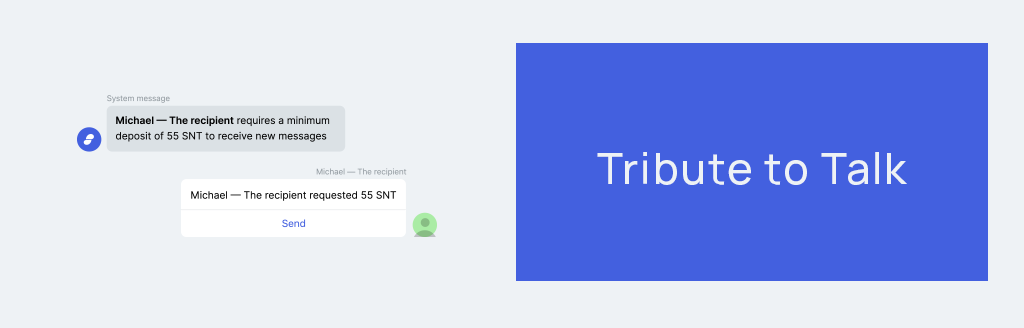
Not all ideas pan out - we started development on a feature that would act as an economics-based spam filter, allowing users to monetize their time and attention by setting an SNT minimum deposit to start a conversation with them. Ultimately, we parked this idea as it worked out to be incompatible with the changes introduced by supporting multi accounts.
We will be coming back to this feature in future versions of Status.
Our Keycard team made great strides in the quarter:
- In April, we manufactured and made available Keycard and its API to all developers, facilitated by an e-commerce website allowing anyone to order a Keycard. More than 800 units were shipped to developers in Q2 2019.
- V1 Android users will be able to onboard Status with Keycard, protect access to their account with Keycard, and of course, Keycard will securely store their private keys offline.
- A Keycard application running on Nano X was developed, which uses the Keycard API. This will enable usage of Status, with the keys stored on the Nano X, in Q3 2019.
- We have released a proof of concept of Keycard being used as crypto debit card when tapped on a Point of Sales terminal.
Embark 4.0 officially launched out of beta! Its new features include:
- Cockpit:
- A command center for building, debugging, and deploying decentralized applications.
- Debugger:
- An easy way to debug contracts by displaying solidity source code lines where a transaction fails.
- Tooling integration:
- Improved tooling integration which is now compatible with any frontend tooling such as the Create React App and the CLI tools for Angular, Vue, and more.
Embark also launched a cosmic new website with updated docs, more tutorials, and a brand new look - check it out.
The Nimbus team has had a productive 2019. Here is what's been keeping them busy:
- Introducing Lightbus + Networking updates!
- Team Nimbus worked with the team from Lighthouse on making Nimbus and Lighthouse talk to each other. So far, so good!
Hello Lightbus - @ethnimbus and @sigp_io #eth2 beacon nodes talking #libp2p - easy ☑️ pic.twitter.com/z1jG08mRMz
— Jacek Sieka (@jcksie) June 16, 2019
- Attestation pool improvements
- There is now support for overlapping attestations.
- Ethereum 1.0
- Ethereum 1.0 progress has been accelerating and is nearing block 6 million! The aim is ultimately to be able to read Ethereum 1.0 deposits for the 2.0 beacon chain, from within Nimbus. Naturally Nim will support connecting to external nodes like Geth and Parity. The RPC interface is being built already.
- Docs Suite (in development)
The protocol swarm was established with the aim of developing a set of open protocols for decentralized communication, working alongside other teams in the ecosystem. We'll make use of existing protocols and standards, but also develop our own protocols, where needed, to meet our specific requirements. In Q2, the team worked on:
- Data sync - providing reliable and decentralized communication
- Communication, collaboration, and outreach
- Messaging for Web3, collaboration with Web3 Foundation and others
- Current specifications and protocol separation
- Initial specs for the current protocol separated out into trust establishment, conversational security, transport privacy, message payload, account creation and maintenance, with security guarantees (WIP)
- Protocol separation from rest of the app to make it easier to reason about, port, change and audit (work in progress), plus a standalone console client.
To give you an idea of the financials of running this project, here's a snapshot of our expenses and reserves in 2019.
| Expenses | Q1 2019 ($1,000s) | Q2 2019 ($1,000s) |
|---|---|---|
| Salaries, core contributor fees & individual expenses | $1,900 | $1,800 |
| Third party vendors | $100 | $200 |
| Marketing & sponsoring | $50 | $50 |
| Reserves | Q1 2019 ($1,000s) | Q2 2019 ($1,000s) |
|---|---|---|
| ETH & USD holdings | $30,000 | $57,000 |
[For ease of reference, we've shown our financial data in this report in USD. When putting together this information, we used the following exchange rates to convert ETH balances:
- Q1 2019 - Coingecko, 31/3/2019, 1 ETH = ~$142
- Q2 2019 - Coingecko, 30/6/2019, 1 ETH = ~$321]
Currently, all Status projects are centrally funded from Status' reserves that were built up during 2017's Contribution Period event. To achieve our goal of permissionless participation in Status as a public good, our aim, eventually, is to become a procurement network called a Decentralized Autonomous Organization. You can read more about that here.
Liquid Funding allows anyone to participate in this network, in the role of either a funder or contributor.
Work is underway to create the infrastructure for Liquid Funding, and we expect in Q3 to see some of the first projects funded under this modern procurement idea. If you have a project you'd like to see funded, keep in touch and we'll let you know as soon as Liquid Funding is ready.
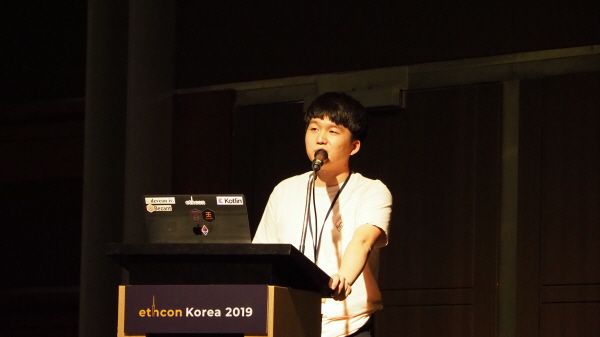
Status had representation at the following events in Q2:
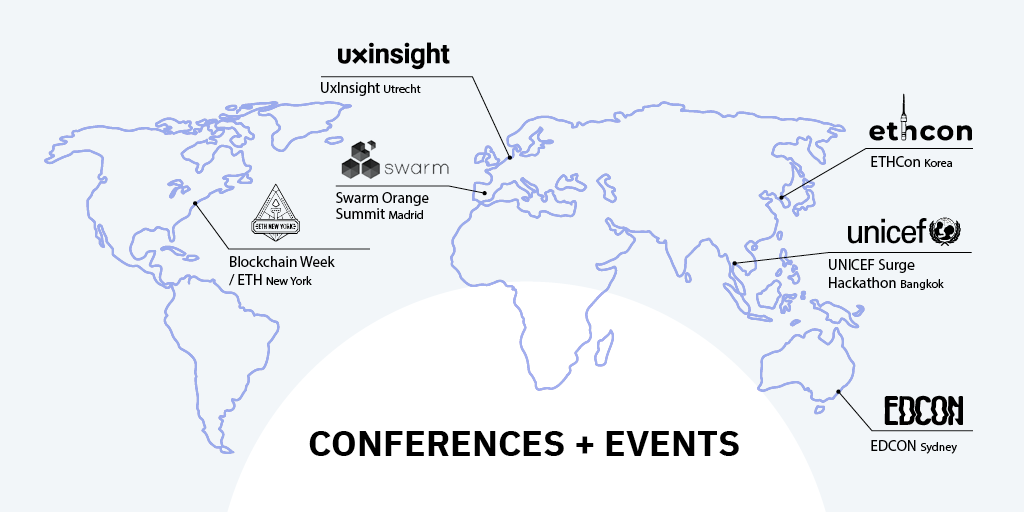
- ETHCon, Korea: You can check out a recap of Jinho's talk here
- Blockchain week NY / ETHNewYork: Attended by a few local contributors
- Swarm Orange Summit, Madrid: Jarrad, Oskar & Jacek attended, representing Protocol research
- UNICEF Surge Hackathon, Bangkok: Andrea Franz & Eric Mastro gave educational talks on Keycard & Embark to local participants
- UxInsight, Utrecht: Hester gave a talk on UX Research For Blockchain.
If you haven't had a chance to see @ericmastro 's talk about "Blast off with Embark", the recording is now up online!
— 🚀 Embark (@EmbarkProject) May 20, 2019
Learn how to debug your DApps using Embark and Cockpit!https://t.co/8Etvqlwr4i
Frugality has been the name of the game in Q2 (we want to make the most out of the reserves we have and think long term), so we made careful decisions on which events merited attendance. The events you see mentioned above are those in which we felt that we could add value to the community, or where the conference was invaluable to our research. Where possible we prioritized attendance by local Status contributors; in the interests of sustainability.
Moving into Q3 and beyond, you can find us at EthBerlin, DappCon, and TEGG, plus a few contributors will be attending DevCon 5.
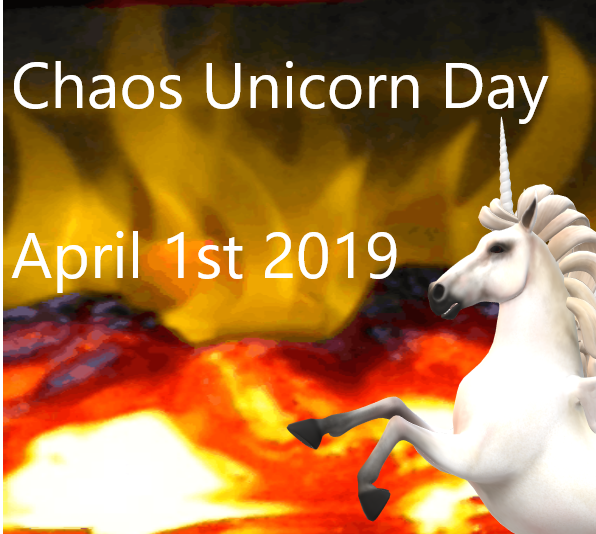
A recap of our favourite events of the quarter would not be complete without special mention to Chaos Unicorn Day, a dramatic (but educational) April 1st, where we broke Status as an experiment. We introduced some chaos - killing our cluster and switching off access to all centralized services for 24 hours - to show us where the gaps were in our promise to be censorship-resistant and resilient.
How did we fare when the rubber met the road? Well, many things stopped working, as we expected (no chat - bootnodes in our cluster were down, no wallet - couldn't connect to a centralized service to read balances, etc. etc.), but it was all worthwhile in the end as we learned a lot, and came away with a solid plan for addressing our decentralization shortcomings.
On the partnerships side, we teamed up with Pictosis to crowdstorm a design for the $Picto token logo. Check out the competition & winners here.
We’re teaming up with @pictosis – a playground for designers– to crowdstorm a design for the $Picto token logo. Submit a design and you could win some PICTO, DAI, SNT, a @keycard_ and some other cool stuff! Details below & join the #pictosis Status channel https://t.co/YiD2sSLIwy pic.twitter.com/7OEtT9rSre
— Status (@ethstatus) May 9, 2019
Our number of core contributors has remained fairly flat throughout 2019, but with a significant decrease YTD since 2018 (in which we reduced our project headcount to weather a turbulent market).
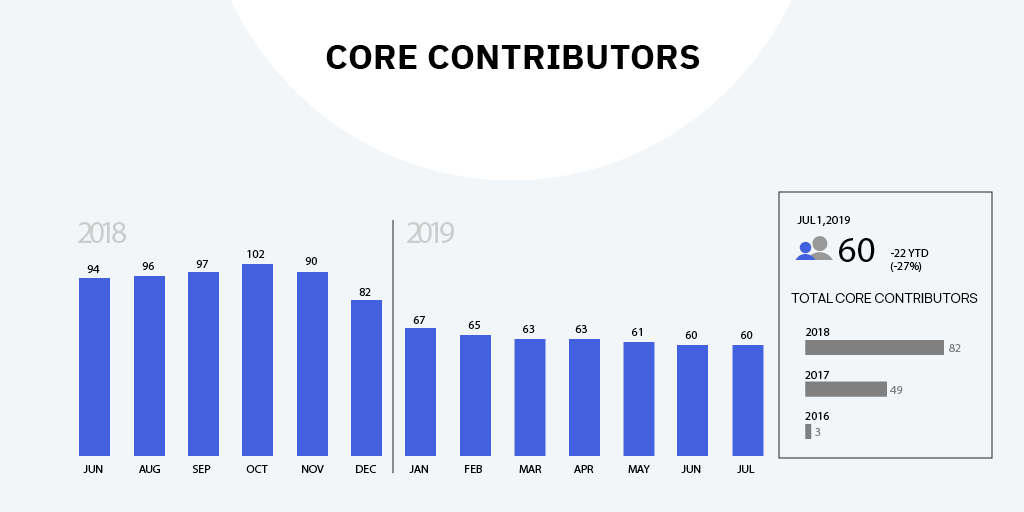
During Q2, we said goodbye to three core contributors, and added four new contributors: Kim de Mey on Nimbus, Dean Eigenmann on Protocol, Robin Percy on Developer Relations, and Simon Rico on Design.
Our #statusphere ambassador program saw strong activity in Q2, with a cohort of 15 ambassadors rocking everything from designing, giving talks at events, working on bounties, and contributing OS code.
Special shoutout to our ambassadors who tirelessly push Status forward using their unique individual talents...
- @tbenr @yalu and @krisc on developer relations
- @brianxv on creative
- @mjohnm, @kos.talent, @daniel, @robert, @bob, @prabhleen, @warsoverjohn, @sourav and @wondeuk on community development, education, and digital media strategy
- Also @lalo, @warsoverjohn, @sebastian for being the welcome committee for new Status users...
... you all rock, and thank you for being part of this adventure with us!
We're lucky to have a community of people involved in Status in other ways too. In Q2, we funded 34 bounties and had 5 community members actively contributing code.
We're always excited to welcome more contributors into the fold, so if you'd like to get involved you can read more here, or come chat to us about how you can get involved! Status is open for everyone to participate - technical and non-technical folks alike.
If Q2 saw us spread our efforts across the web 3.0 stack, looking ahead to Q3 and beyond, we're aiming to put designs, tools, and coordination in people's hands to enable them to take back the web.
We want to be more competent in research, protocol design, and infrastructure. We've proven that we can make a gateway to the decentralized web, with Status as a chat, wallet, and DApp browser client – available on multiple platforms. But now it's time to turn our attention (and investment) to areas where Ethereum hasn't lived up to the promise; and that's messaging and file storage.
We're exploring exciting concepts around incentivized messaging, and looking to build a state-of-the-art modular private messaging protocol. Similarly with file storage, we recognize that today's DApps might not always actually be DApps, relying on centralized technology for functionality. We'll be looking for ways to incentivize file storage to make it truly decentralized.
In addition to that, we want to do better in:
- Embark adoption,
- Building out a payment network for Keycard,
- Integration with you, the community.
These are challenges that we'll work on in the coming months, and we'll be sure to keep you updated in our next quarterly report.
Thanks for reading this first edition. We love to talk about what we do, so if you have any questions or want to chat, feel free to drop by our Discuss or catch us in Status on #status. If you'd like to get involved in putting together the next edition, let us know, we'll be bountying parts of the work that go into this report.
Cheers, and here's to Q3! 🙌🏻 - your friends at Status.
This report was made for your entertainment, and we'd ask you not to rely on it for any other purposes, e.g. making investment decisions. Just to be super transparent, we want to highlight that:
- Token metrics info is an estimate supplied by a third party, given for illustrative purposes. We have not independently verified or fact checked this data.
- Status financial information provided is estimated based on data available on 12/7/2019 and may change due to intercompany chargings or ongoing updates in accounting. Numbers have been rounded for ease of presentation.
Thanks!